Introduction to a Groundbreaking Discovery
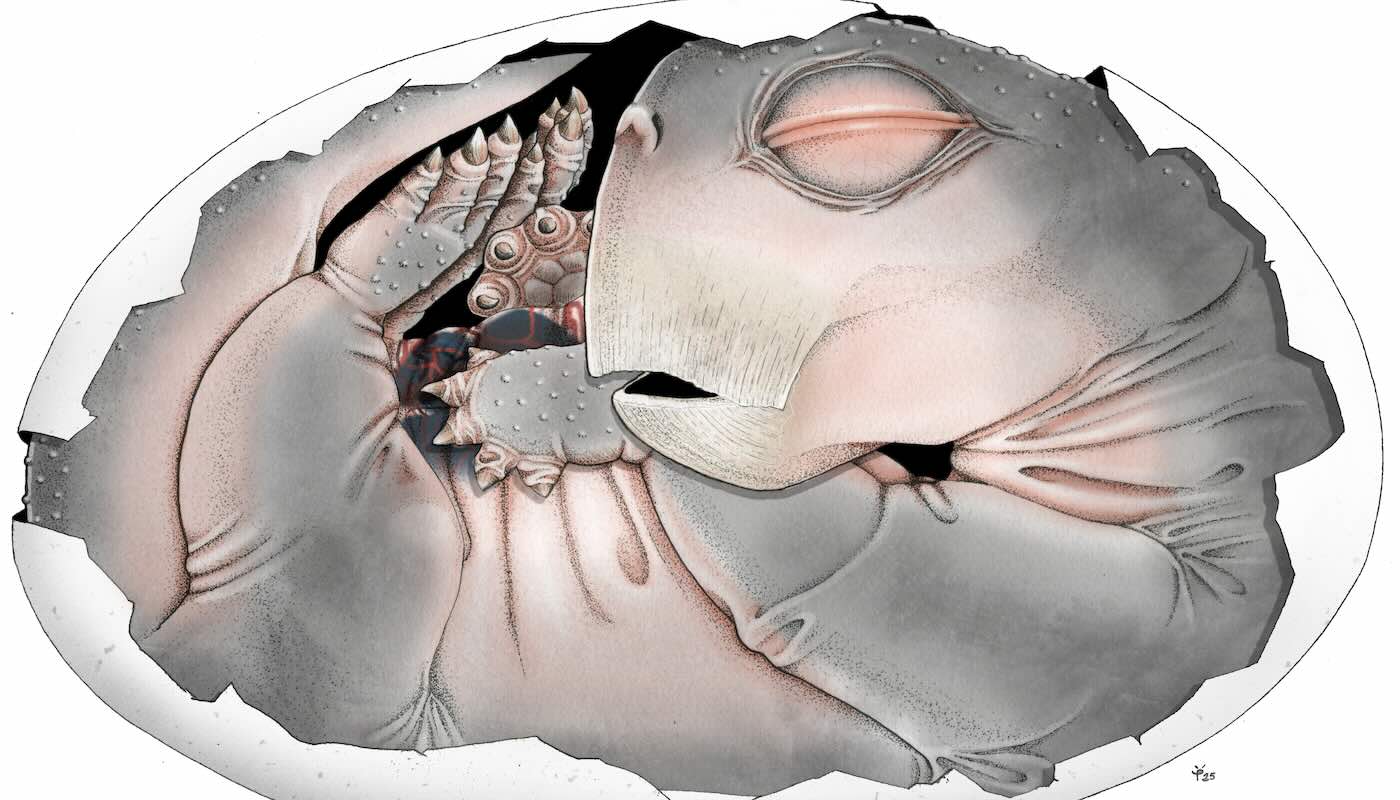
The scientific community has been abuzz with the recent unearthing of a 120-million-year-old embryo fossil, a finding that is being hailed as a significant missing puzzle piece in the understanding of mammalian evolution. This extraordinary discovery has provided the oldest proof to date that the ancestors of modern mammals laid eggs, a characteristic that was previously known but lacked substantial fossil evidence. The embryo, found in the vast and fertile landscapes of Mongolia, is not only a remarkable specimen due to its age but also because of the insights it offers into the reproductive strategies of ancient mammals.
The Significance of the Embryo Fossil
The discovery of this ancient embryo fossil is a thrilling moment for scientists, as it bridges a critical gap in the knowledge of mammalian evolution. For a long time, it has been theorized that mammals evolved from a group of reptiles, and during the transition, these early mammals retained the trait of laying eggs, a characteristic known as oviparity. However, the fossil record of early mammals has been sparse, particularly when it comes to direct evidence of their reproductive methods. The embryo fossil, with its estimated age of 120 million years, places it in the Cretaceous period, a time when dinosaurs still roamed the Earth and mammals were beginning to diversify.
Understanding Mammalian Evolution
Mammalian evolution is a complex and multifaceted field of study, with scientists piecing together evidence from various disciplines including paleontology, genetics, and comparative anatomy. The transition from reptilian ancestors to the first mammals is believed to have occurred over 160 million years ago, during the Jurassic period. These early mammals were small, likely nocturnal creatures that coexisted with the dominant reptiles of the time. Over millions of years, mammals evolved a range of adaptations that would eventually allow them to thrive in a variety of environments. One of the critical adaptations was the development of viviparity, or giving birth to live young, a trait that is characteristic of most modern mammals. However, the journey to viviparity was gradual, with many early mammals laying eggs, as evidenced by the recently discovered embryo fossil.
Implications of the Discovery
The implications of this discovery are profound, offering a unique window into the reproductive biology of ancient mammals. The fossil, which is remarkably well-preserved, shows an embryo at an advanced stage of development, suggesting that it was close to hatching when it was fossilized. This level of preservation is rare and provides scientists with an unprecedented opportunity to study the developmental biology of early mammals. Furthermore, the discovery supports the theory that mammals evolved from a common ancestor with reptiles, sharing a common reproductive strategy before diverging into different evolutionary paths.
Technological and Methodological Advances
The discovery of the embryo fossil is also a testament to the technological and methodological advances in the field of paleontology. The use of sophisticated imaging techniques, such as CT scans and 3D reconstruction, has allowed scientists to study the fossil in detail without causing damage. These technologies have become indispensable tools in paleontological research, enabling the extraction of maximum information from fossils that are often fragile and rare. Moreover, the collaboration between scientists from different disciplines, including paleontologists, biologists, and geologists, has been crucial in interpreting the significance of the fossil and placing it within the broader context of mammalian evolution.
Future Research Directions
The discovery of the embryo fossil opens up new avenues for research into the evolution of mammals. Scientists are eager to learn more about the developmental biology of early mammals, including how they nurtured their young and the evolutionary pressures that led to the development of viviparity. Further studies on the fossil and similar discoveries could provide insights into the ecological niches that early mammals occupied and how they interacted with their environments. Additionally, the finding underscores the importance of continued exploration and excavation in regions known for their rich fossil deposits, as these areas hold the keys to unlocking the secrets of Earth's history.
Conclusion
In conclusion, the discovery of the 120-million-year-old embryo fossil is a significant milestone in the study of mammalian evolution, offering the oldest proof that the ancestors of modern mammals laid eggs. This finding not only fills a critical gap in our understanding of how mammals evolved but also highlights the importance of fossil evidence in reconstructing the history of life on Earth. As scientists continue to unravel the mysteries of the past, discoveries like the embryo fossil remind us of the awe-inspiring complexity and diversity of life, and the profound impact that scientific inquiry can have on our understanding of the world and our place within it.

