author: “Menshly Intelligence Board” authors:
- “menshly-intelligence-board”
Introduction to the Record-Breaking Map
The universe has long been a subject of fascination for humans, with scientists and astronomers continually seeking to understand its vast expanse and intricate details. In a groundbreaking achievement, a team of researchers has successfully created a record-breaking map that charts the universe in 3D like never before. This monumental feat has shed new light on the cosmos, providing unprecedented insights into the distribution of galaxies, galaxy clusters, and other celestial objects. The map, which is the result of years of meticulous data collection and analysis, has sent shockwaves throughout the scientific community, sparking widespread excitement and curiosity.
The Mapping Process
The creation of this record-breaking map was a complex and challenging process that involved the collaboration of hundreds of researchers from around the world. The team utilized a combination of cutting-edge technologies, including advanced telescopes, sophisticated algorithms, and high-performance computing systems. The mapping process began with the collection of vast amounts of data from various astronomical surveys, including the Sloan Digital Sky Survey (SDSS) and the Dark Energy Survey (DES). This data was then analyzed using specialized software that enabled the researchers to reconstruct the 3D structure of the universe.
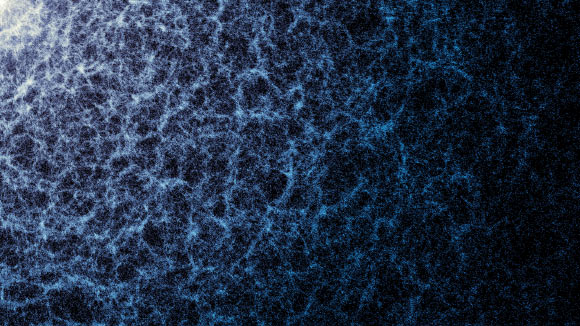
The team employed a technique known as spectroscopy, which involves measuring the light emitted by celestial objects to determine their distance, composition, and motion. By analyzing the light spectra of millions of galaxies, the researchers were able to create a detailed map of the universe, complete with precise measurements of galaxy positions, velocities, and clustering patterns. The resulting map is a stunning visualization of the cosmos, showcasing the intricate web of galaxy filaments and voids that crisscross the universe.
Key Features of the Map
The record-breaking map is a marvel of modern astronomy, boasting an unprecedented level of detail and accuracy. One of the most striking features of the map is its sheer scale, which spans over 7 billion light-years of cosmic distance. The map reveals the universe in exquisite detail, with galaxy clusters and superclusters stretching across vast expanses of space. The researchers have also identified numerous galaxy filaments, which are long, thread-like structures that connect galaxy clusters and superclusters.
Another notable feature of the map is its ability to reveal the distribution of dark matter, a mysterious and invisible form of matter that is thought to make up approximately 27% of the universe's mass-energy density. By analyzing the clustering patterns of galaxies and galaxy clusters, the researchers were able to create a detailed map of dark matter distribution, which is essential for understanding the universe's large-scale structure and evolution. The map also provides valuable insights into the properties of dark energy, a mysterious component that is driving the accelerating expansion of the universe.
Implications and Applications
The record-breaking map has far-reaching implications for our understanding of the universe and its many mysteries. One of the most significant applications of the map is its potential to shed light on the nature of dark matter and dark energy, which are two of the biggest unsolved puzzles in modern astrophysics. By studying the distribution of galaxy clusters and galaxy filaments, researchers can gain valuable insights into the properties of these enigmatic components and how they interact with normal matter.
The map also has significant implications for cosmology, the study of the universe's origin, evolution, and fate. By analyzing the large-scale structure of the universe, researchers can gain a deeper understanding of the universe's expansion history, including the role of dark energy and the properties of the cosmic microwave background radiation. The map can also be used to test competing models of the universe, such as the Lambda-CDM model, which is currently the most widely accepted theory of cosmology.
Future Directions and Challenges
While the record-breaking map is a groundbreaking achievement, it is only the beginning of a new era of astronomical research. The researchers behind the map are already planning future surveys and observations that will further refine our understanding of the universe. One of the most exciting future directions is the use of next-generation telescopes, such as the Square Kilometre Array (SKA) and the James Webb Space Telescope (JWST), which will enable researchers to study the universe in unprecedented detail.
However, the creation of such maps also poses significant challenges, including the need for advanced computational resources and sophisticated data analysis techniques. The researchers must also contend with the complexities of astronomical data, which can be affected by a range of systematic errors and biases. Despite these challenges, the record-breaking map is a testament to human ingenuity and the boundless curiosity that drives us to explore and understand the universe.
Conclusion
In conclusion, the record-breaking map that charts the universe in 3D like never before is a monumental achievement that has sent shockwaves throughout the scientific community. The map is a stunning visualization of the cosmos, showcasing the intricate web of galaxy filaments and voids that crisscross the universe. With its unprecedented level of detail and accuracy, the map has significant implications for our understanding of the universe and its many mysteries, including the nature of dark matter and dark energy. As researchers continue to refine and expand the map, we can expect to gain even deeper insights into the workings of the universe, ultimately shedding light on the biggest questions of all: where did we come from, and where are we going?