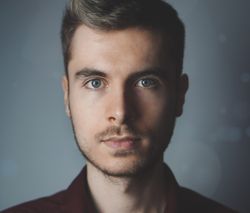
Marcus Webb is a passionate science communicator who has spent the past decade making the most complex discoveries accessible to millions of readers around the world. Based in Boston, surrounded by some of the world's premier research institutions, he covers the full spectrum of scientific inquiry — from the fundamental physics of the cosmos to the urgent realities of climate change. Marcus has a rare gift for narrative science writing, weaving together the personal stories of researchers with the grand sweep of their discoveries. Before joining MenshlyGlobal, he was a senior science writer at a leading American magazine, where his features on CRISPR gene editing and the James Webb Space Telescope attracted millions of readers. He holds a Master's degree in Science Writing from MIT and a Bachelor's in Astrophysics from Harvard.
Areas of Expertise
- Space exploration, astronomy, and planetary science
- Climate science, earth systems, and environmental research
- Biotechnology, genomics, and the ethical frontiers of gene editing
- Neuroscience and artificial intelligence convergence
- Science policy, research funding, and the politics of evidence
Career Highlights
- Winner of the 2024 AAAS Kavli Science Journalism Award for his long-form feature on the search for biosignatures on exoplanets
- His feature on the ethical dilemmas of embryonic gene editing was selected for inclusion in "The Best American Science and Nature Writing 2023"
- Keynote speaker at the 2024 World Science Forum in Budapest on communicating climate science to skeptical audiences
- Contributing editor to "Scientia," a quarterly magazine bridging research and public understanding
Recent Coverage
Marcus has been closely following the latest findings from the James Webb Space Telescope, producing a series of features that translate groundbreaking infrared observations into vivid, accessible narratives about the early universe. His climate coverage has recently focused on tipping point research, interviewing leading glaciologists and oceanographers about accelerating feedback loops in the Arctic and Antarctic. He is also tracking the rapidly evolving field of brain-computer interfaces, reporting on both the technological promise and the profound ethical questions these systems raise. His current long-form project profiles three teams racing to develop the first clinical applications of CRISPR-based gene therapy for sickle cell disease in sub-Saharan Africa.